Table of Content, LO4
- Osfast Branding Project
- Belco Alliance UX
- Belco Development Project
Osfast Branding Project
Client presentation (1st sprint and final)
Introduction
I served as the spokesperson for both the Sprint 1 and Final presentations during the Osfast project. These were key milestones where we presented our research, design progress, and final brand deliverables to the client.
Who?
- I was the lead presenter during Sprint 1, and co-presenter with Constantin for the final presentation.
- The entire group contributed to the content, design, and scripting.
- Oscar, our client, was the main stakeholder receiving and reacting to our work.
What?
In Sprint 1, I presented:
- Our initial style scapes
- Pitched color palettes, fonts and logo ideas
- Asked for Oscar's feedback to narrow down his brand identity
- Divided the slides and presented all final deliverables
- Explained the thought process behind each decision we took while designing
- Handed Oscar a physical brand guide booklet while I walked him through the contents of the book.
Why?
Presentations to the client are essential for:
- Maintaining transparency and showing the group's progress
- Receive live feedback based on tone, body language and engagement
- Establish trust by showing that the work is thoughtful and audience-aware.
impact?
Oscar was very content with the final presentation and even mentioned that he would be using parts from both groups’ work. The presentation made our decision clear and showed that we listened to feedback throughout. It also reinforced our credibility and ability to deliver professional results.
reflection
I learned the importance of presentation planning and role delegation. In the first presentation, there was some overlap and unclear transitions. For the final, we divided the slides evenly, which made the flow smoother and gave everyone room to speak about their contributions. Going forward, I’ll make sure we assign speaking roles based on comfort and expertise — not everyone needs equal time, but everyone deserves a clear role.
User Research
Introduction
Oscar, our client for the Osfast branding project, gave us a general overview of his target group. However, the description was too broad to make clear design decisions, so we refined it using user research methods, including surveys and design testing.
Who?
A collaborative effort from the project group, including myself, Ceyda, Fahri, Bianka and Constantin, handled the research and data collection of the survey.
What?
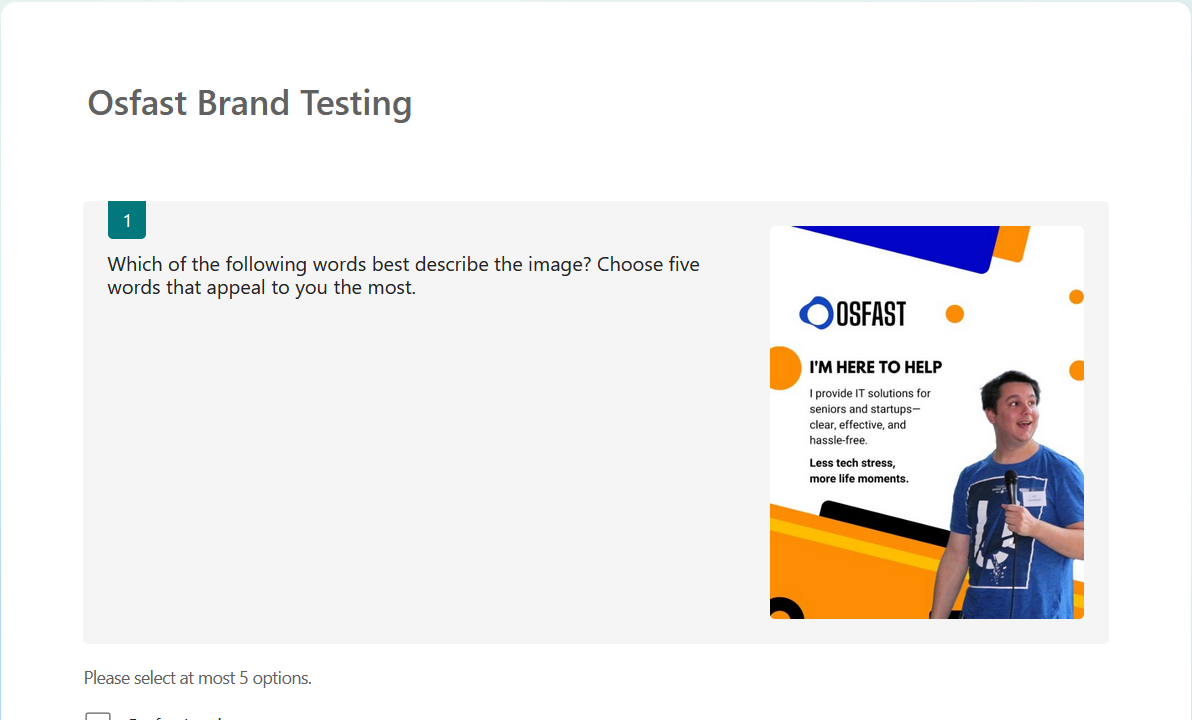
Brainstorm and refine questions for the survey to get user feedback on two poster designs made by Ceyda, we used Microsoft Forms to create a structured survey
Why?
We needed user feedback to validate visual choices for posters that could be used both online and in print. Oscar was not the target audience, so we had to base design decisions on the actual users' preferences.
Impact?
The user research provided clarity on which poster design was more effective and guided the visual direction for Osfast’s materials. It also gave us user-centered reasoning to explain our design choices in later presentations, ensuring our work was defensible and not just subjective.
reflection
This task taught me the importance of survey design. A weak or vague survey leads to useless data and wasted effort. In future projects, I’ll make sure surveys go through internal testing or feedback rounds before being sent out, to ensure questions are clear, specific, and useful. A well-made survey can be the difference between an informed design and a guess.
Belco Alliance UX
Introduction
We were introduced to Belco Alliance, a non-profit organization looking to redesign their outdated website. The client asked us to create a functional prototype to eventually replace the current one, which lacked modern features and clear structure.
Project plan and team charter
What?
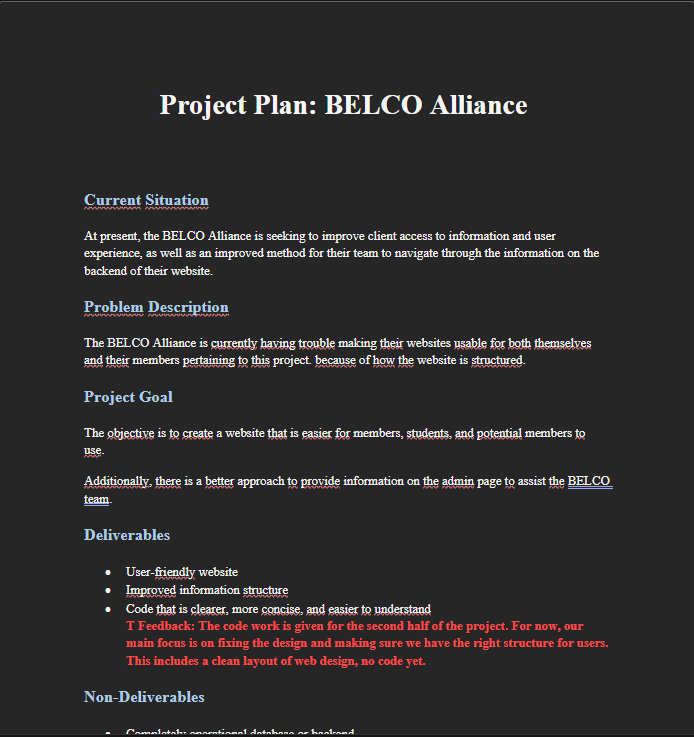
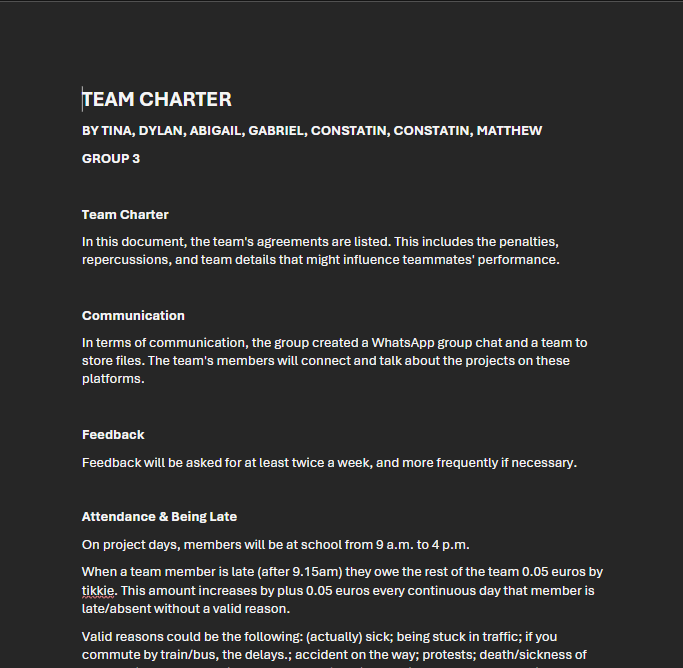
We came together to work on our project plan to define our deliverables at the end of the project and what our plans were for every 2 weeks of each sprint. On top of that we also split the tasks to each member, assign roles for the group and tackled our risks. For team charter we set group rules that we would follow semi-strictly.
Why?
The project plan gave our group a planning, phasing and goals to follow. The team charter allowed for better communication by setting team rules and contact information for each member of the team as well as a creation of a group chat to stay connected at all times.
Impact?
The project plan prevented us from missing a deadline as we had split the tasks to not overload any member with work, as well as reaching our milestones we set for each phase. It also allowed us to be flexible to allow us to adapt if any deviation were to happen.
Reflection
The importance of a project planner and team charter could not be overstated, it helps a team connect and set rules, along with the general plan to follow with a gap to adapt accordingly. For future projects I would refer back more to these documents as it was a start document that was later forgotten until the end.
Initial Belco research
Who?
Our group was tasked with improving the Belco website. I was tasked with doing early research into how similar non-profit organizations structure their websites and what user experience strategies are employed.
What?
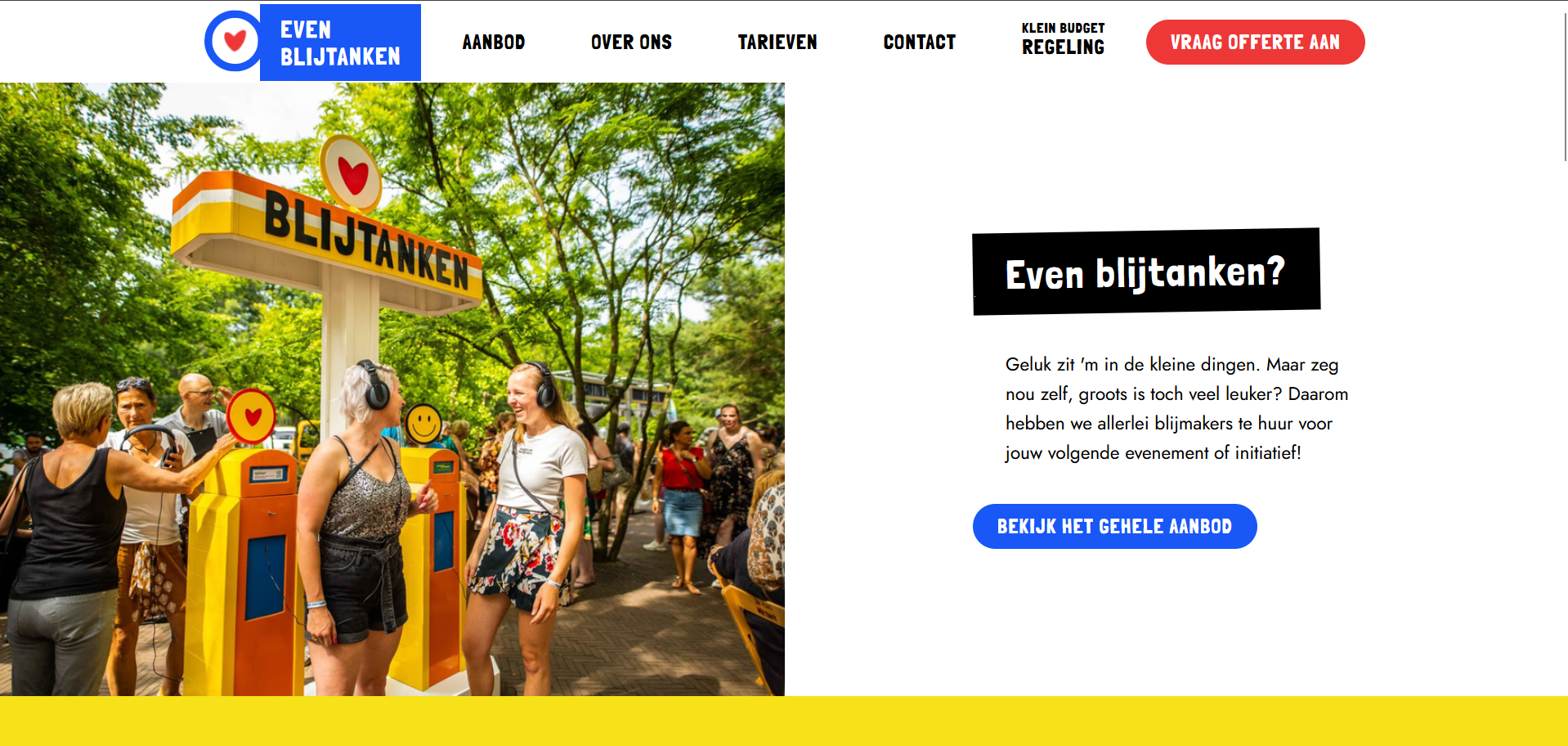
I conducted competitive research by analyzing websites from similar non-profits — most notably Blijtanken, SIDN fonds and Alzheimers Nederlands. The goal was to gather insight into common design standards.
Across multiple sites, I identified a consistent structure:
- Most featured a large, eye-catching image or splash of color at the top of the page. This drew the viewer’s attention and held brief but impactful information about the organization or the organization’s slogan.
- The layouts often guided users visually — the largest text or image would always demand attention first, establishing a clear entry point into the content.
- Each site had a strong sense of brand identity:
- For example, Blijtanken communicated an “arts & crafts” feel with askew section titles and playful font choice.
- Others maintained a minimalist design while clearly reinforcing their brand through typography, color palette and layout choices.
- One effective interaction I noticed that Belco also had was the use of a clear call-to-action button leading the information on the organization and its mission. These buttons usually found themselves as one of the first interactions apart from the navigation bar, that would lead the user to engage with the website.
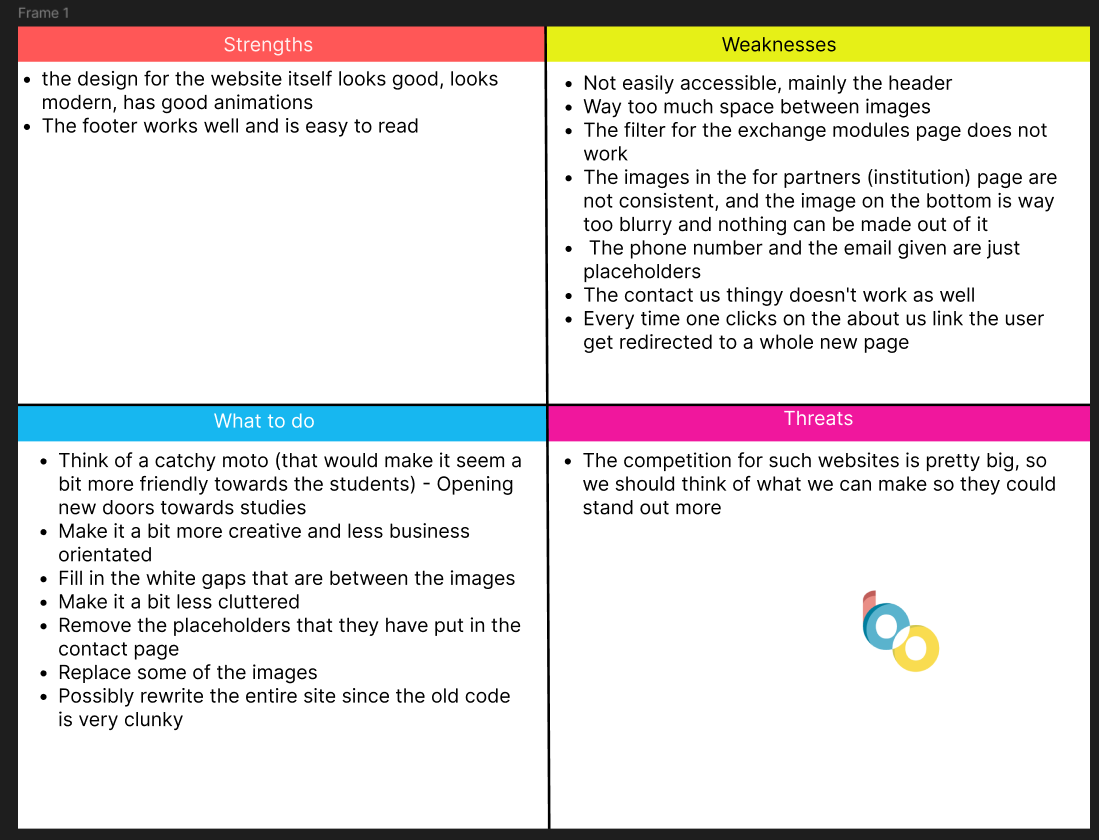
We used these insights to fill in the MoSCoW table with what we should focus on and what could be a later inclusion. We then used the data gathered to organize it into a shareable format to plan our design direction.
Why?
Belco’s original website lacked structure, visual engagement, and a strong identity. We couldn’t base our design decisions on assumptions, so this research helped establish what modern non-profit websites were doing right. Understanding these patterns allowed us to identify gaps in Belco’s site and build a plan grounded in real-world examples.
impact?
The insights I gathered shaped the early wireframes and directly influenced the group’s MoSCoW table, helping us define what features to prioritize. It also provided a shared visual language and gave the team a clearer sense of what to aim for in our prototypes — not based on abstract ideas, but on tested and effective designs.
reflection
This task emphasized the value of research before design. I now see how much time and effort can be saved by learning from existing websites that serve a similar purpose. It gave our group a clear starting point and helped avoid wasted work on unfocused designs. Going forward, I’ll apply this step early in all major projects to create more grounded, user-driven designs.
First Belco Presentation
Introduction
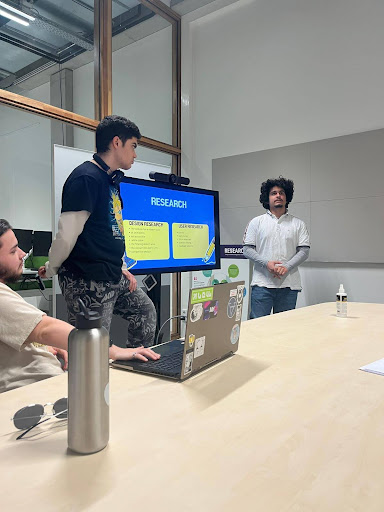
After two weeks of working on the Belco Alliance redesign, we had to present our first sprint findings to the client. Constantin and I were selected to be the group’s spokespeople. This sprint presentation was intended to show what had been done up to that point and how we planned to continue moving forward.
Who?
The presenters were myself and Constantin, with support and preparation from the rest of the team. The audience was Belco Alliance, our client and stakeholders.
What?
We split the presentation equally, showcasing research progress, initial design concepts, and early prototypes. I encouraged team members to explain their thought process behind their designs to involve everyone and provide Belco with deeper insight into our collective work.
Impact?
We were informed that our user research was lacking and that we were behind schedule. This feedback triggered a reassessment of our approach, and I personally shared the survey more widely to collect additional responses. The feedback realigned us with Belco’s expectations and underscored the importance of user research.
reflection
I learned that during client presentations, it’s important to speak for the team and not as an individual. Improvisation works, but it risks missing key points, so I plan to use cue cards or notes in the future. I also learned that user research holds more weight than the design alone — especially when the client isn’t the direct user. Next time, I’ll ensure research is embedded early to support every design decision.
Belco User Interviews
Introduction
Following the first sprint presentation, our team was tasked with gathering more qualitative feedback through interviews. I conducted two remote interviews with people who matched Belco’s target demographic.
who?
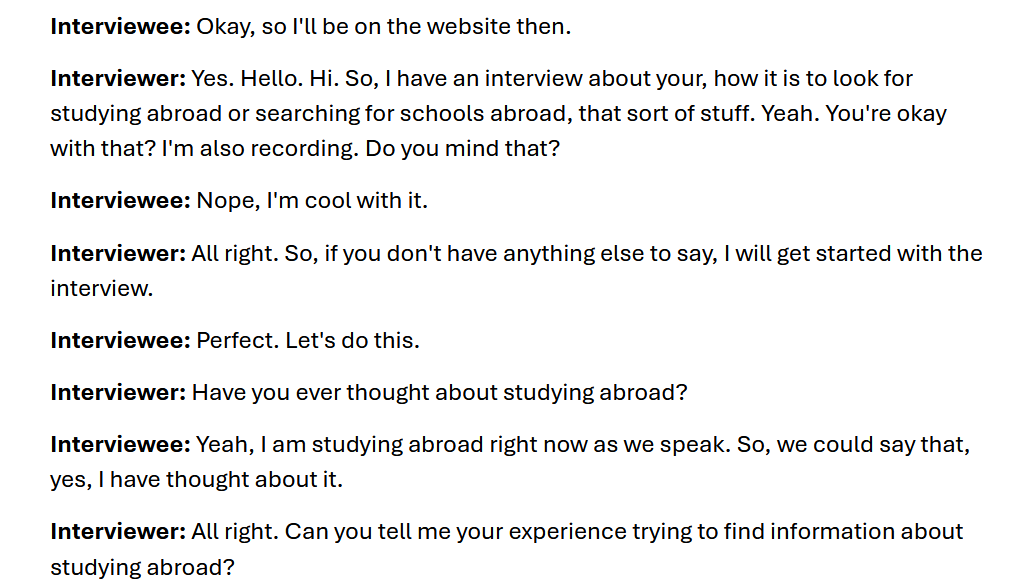
I (Matthew) was the interviewer and two individuals who were part of the intended audience – people interested in studying abroad – were the interviewee.
What?
- I used OBS Studio to record screen and audio during interviews conducted through a messaging platform.
- The interview had two parts: general questions about studying abroad, and a guided walkthrough of the existing Belco Alliance website.
- I gained verbal consent to record, then asked for ratings, impressions, and usability feedback as they explored the website.
why?
We were behind on user research, and these interviews gave us deeper insight into how the site was perceived by real users. Unlike surveys, interviews reveal detailed reactions and usability issues.
Impact?
These interviews helped confirm design flaws and gave direction for future changes. However, I noticed that users skipped over known issues unless specifically prompted.
reflection
I learned that interviews must be guided toward uncovering usability problems — simply asking questions isn’t enough. Next time, I’ll include task-based scenarios like applying to school, to ensure users interact more thoroughly with the prototype. Interviews offer unique, valuable feedback that complements survey results and are essential in validating design decisions with real users.
Belco Development Project
Introduction
After the UI/UX design phase for the Belco Education website, we transitioned into development and were divided into smaller groups. Our goal was to turn the Figma prototypes into functioning HTML sites. To stay organized and prevent merge conflicts or idle time, we adopted Trello to plan our workflow effectively.
Who?
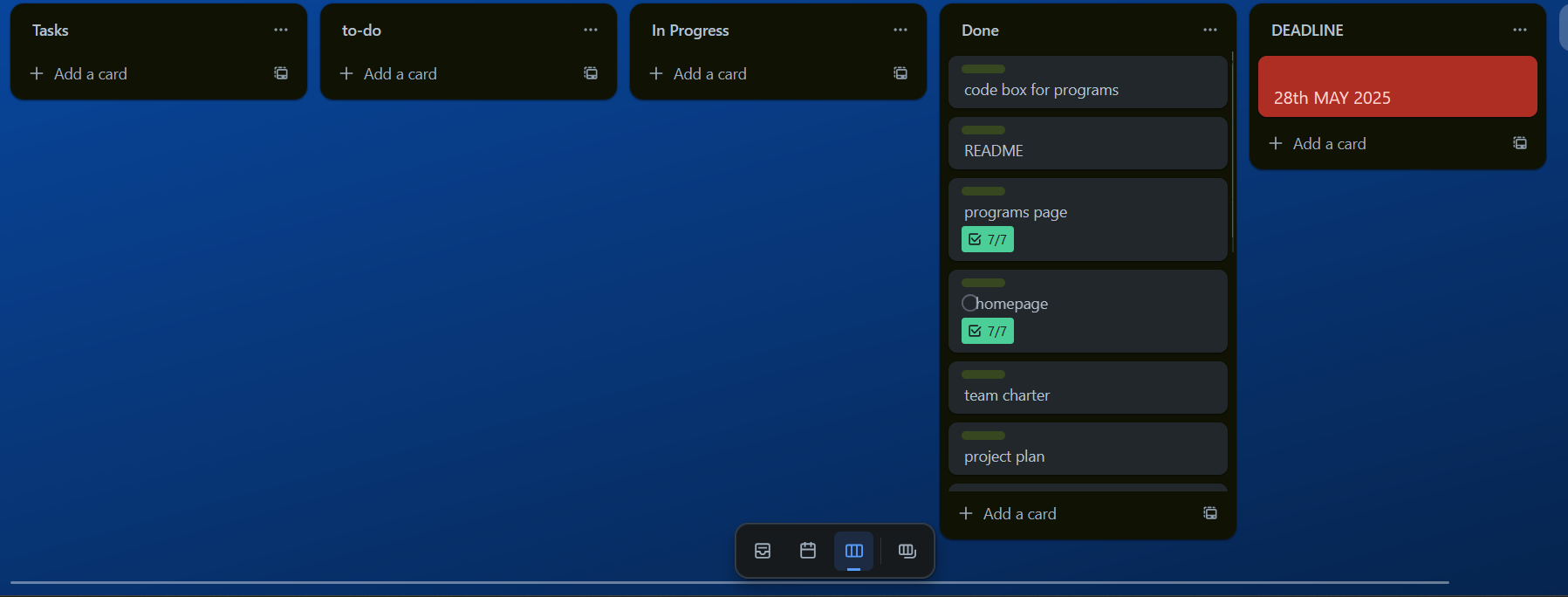
The development group was made up of 3–4 people, and everyone participated in maintaining the Trello board and assigning tasks.
what?
We created a Trello board to visualize the work that needed to be completed. Each major webpage was broken down into subtasks to ensure coverage of all required elements. The board served as both a checklist and a communication tool, which we regularly updated as we progressed and reviewed our tasks. We also aligned our progress with teacher feedback.
why?
We needed a system to keep the group coordinated, avoid redundant work, and minimize code conflicts in Git. Trello made it easier to track progress and assign responsibilities. It also encouraged personal accountability and gave each group member a clear focus.
impact?
Trello allowed us to maintain momentum and clarity during the two-week development sprint. It kept everyone on task and helped us meet our deadlines more efficiently. Discussions about the board also contributed to smoother collaboration and faster decision-making.
reflection
I learned that planning tools like Trello are very useful, especially in group settings. They create structure and reduce friction between team members. However, tools are only effective if used consistently. To ensure I stay on track in future projects, I’ll combine digital tools with reminders — like post-its or pinned tabs — to keep my goals visible and actionable. This discipline will help me avoid falling behind due to forgetfulness or disorganization.